What do the next 15 years of 21st Century Air Power look like?

The Heart of the Matter

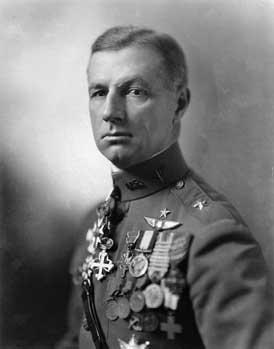
In the development of air power, one has to look ahead and not backward and figure out what is going to happen, not too much what has happened. — Brigadier General William 'Billy' Mitchell, USAS.

The most important branch of aviation is pursuit, which fights for and gains control of the air. — Brigadier General William ‘Billy’ Mitchell, USAS

The terms of reference for looking at the next 15 years of air power are crafted to generate a broad look and a broad debate on how the various elements of change might interact with one another shaping a new combat and presence environment.

  1. The first issue is very basic—is there an emerging shift from the age of Air Power to the age of joint power projection—can a new paradigm be shaped?
  2. America should not be prisoner of last century’s paradigm nor embrace the land warfare concept of airpower. No platform fights alone.
  3. How to implement the Wynne Doctrine-“If you are in a fair fight someone failed in planning” with Rules of Engagement and COIN con-ops.
  4. The past is not the prologue to the future. UAVs are part of the future of airpower not the future of airpower.
  5. Can we leverage our investments for strategic change?  Is a cultural change needed to integrate 4th Gen into 5th Gen capabilities? For example are AWACS really needed?
  6. What is the purpose-“Armed Humanitarians” versus joint power projection?
  7. What does a USAF over the next two decades look like as we re-shape joint approaches and operations?
  8. How will U.S. and allied approaches converge or differ on the evolution of airpower?
  9. How will competitors such as the PRC define their approach to the future of airpower?  And what might the action-reaction cycle look like in the next phase of airpower evolution?
  10. There will be significant development of combat air capabilities in the 2nd and 3rd world.  How will this development reshape the global airpower dynamics?

Factoids

Cost of an Aging Fleet (2)

As the fleet ages and mission requirements are amortized across fewer tails, aircraft require more intense depot-level maintenance. From FY05 to FY10, depot funding increased 24%–from $3.4B to $4.6B. When an aircraft  is in depot, it is unavailable for missions—that …

Dramatic Personnel Cuts?

The Air Force would have to cut 47,000 airmen out of its total force just to hold personnel spending at a constant rate between Fiscal 2011 and Fiscal 2017, said Undersecretary Erin Conaton during an AFA-sponsored presentation in May 2011 …

Mobility Readiness

Mobility air forces have been able to maintain a high readiness level despite “robust and dynamic” operational requirements, said Lt. Gen. Loren Reno, deputy chief of staff for logistics. The mission capability rate for MAF assets currently lies at 82.7 percent …

Precision Key to Close Air Support Success

Combat air activities in Southwest Asia—especially Afghanistan—have grown at a breakneck pace over the past several years, said Lt. Gen. Mike Hostage, US Central Command’s top airman. Close air support sorties in Afghanistan went from 20,359 in 2008 to more …

Rising Cost of Libyan Air Campaign

The Air Force has spent about $270 million on the air offensive in Libya, as of May 22, and officials are still trying to figure out exactly how to pay that bill. “The funding source for Libya operations has not …

Infrastructure Issues

US Strategic Command occupies “a unique operational place” in the nation’s defense and it needs a modern command and control complex that is capable of handling the command’s demanding mission set, said Gen. Robert Kehler, STRATCOM boss. “The facilities that we perform that …

Significant Degradation of Capability with Current Acquisition

The procurement challenges facing the Air Force will not be addressed in the FYDP. Key programs like KC-X, Next Gen Bomber, F-35, and CSAR-X have been delayed—deferring major acquisition to the 2020s. Aircraft like F-22 and E-10 were cancelled, leaving …

Current USAF Acquisition Plans

Calculated Risk of Not Replacing Core USAF Aircraft

The challenges facing the Air Force are the product of calculated risks. During the 1980s and 1990s, the Air Force’s fleet was still relatively young and highly capable due to the robust Cold War-era investments. After fall of the Berlin …

Cost of an Aging Fleet

Air Force aircraft are increasingly more expensive to sustain, yet less effective. •Fleet averages 24 years in age. •Maintenance costs for aging aircraft increases, while the fleet’s availability decreases. •Aircraft structural elements will eventually fail over time—fatigue life cannot be …

Northrop Grumman Unveils the Firebird

Northrop Grumman has lifted the veil on the Firebird, an all-new intelligence-gathering aircraft capable of operating multiple sensors at once in manned or unmanned configurations. Industry partner Scaled Composites designed, built, and tested Firebird, while Northrop supplied the universal payload …

The Air Drop Revolution

Airmen with the 772nd Expeditionary Airlift Squadron at Kandahar Airfield, Afghanistan, completed 81 airdrops in April, setting a new mark for the busy C-130J unit. The April tally eclipsed the squadron’s previous record of 72 airdrops conducted in March. The …

Virtual World

The Air Force is looking to the virtual world to recruit and train new airmen. Officials in the innovations and integration division at Air University at Maxwell AFB, Ala., have created several prototype virtual learning communities in Second Life—an online …

USAF Trend Lines

The breadth of the Air Force’s expanding missions is revealed in a startling statistic: Even if the service retired its entire fighter, bomber, and ICBM inventories, USAF spending would decline by only about 25 percent. The bulk of Air Force …

Aging USAF Aircraft Inventory

The aging of the fleet poses a double edge dilemma; the cost of operating the fleet goes up and the shift to newer more sustainable assets is pushed to the right.

The Evolution of Airpower Under Gates

The larger issue is whether the Gates-led remix of airpower will cause weaknesses in American military power over the long term. In 2010, the impact of the Gates cuts on major military muscle began to draw criticisms from experts concerned …

Onboard pilot optional with Northrop’s Firebird spy plane

Northrop’s new plane, dubbed the Firebird, can switch from being a traditional aircraft to a drone with just a few modifications.

The Century City company is developing the propeller-powered Firebird at its own expense. It is betting that the hybrid plane …

B-1 B Upgrades

B-1B Lancers may one day be able to deliver four times as many precision-guided munitions as the B-52 can on a single sortie thanks to a new Multiple Ejector Rack now in testing. Today, the B-1 can carry twice as …

Chinese J-20

The Chinese J-20 stealth fighter has reportedly returned to flight testing, completing a publicly witnessed flight in recent days that was much longer than its first reported flight back in January. Britain’s Daily Mail reported Tuesday that a J-20 aircraft …

Reductions in Force

Several officer year groups and competitive categories are no longer required to meet the Air Force’s reduction-in-force board this September, announced service personnel officials Monday. No longer having to go before the RIF board are: chaplains, medical service corps personnel, …

More Personnel Reductions Via a Voluntary Route?

Air Force Materiel Command intends to survey its civilian workforce beginning May 1 to gauge interest in how many employees would be interested in early retirement or voluntary separation. The command is considering a Fiscal 2011-12 voluntary early retirement authority/voluntary …

U-2 Pilot

A U-2 pilot achieved 100 combat sorties in the Dragon Lady earlier this month during a mission in Southwest Asia. Identified only by his call sign “Spock,” for security reasons, this major joined an elite handful of pilots to reach …

Early Separation Requests

The Air Force has approved the early separation requests of about 300 officers in non-high-in-demand specialties. These officers are taking advantage of the service’s voluntary separation pay program. They must now leave active duty service by Oct. 1. These voluntary …

Costs of Global Hawk

The costs of the Air Force’s RQ-4 Global Hawk remotely piloted aircraft program grew significantly through the end of 2010, the Defense Department informed Congress last week. The aircraft’s program acquisition unit cost increased 14 percent compared to its current …

Libya and Airpower

A reporter asked me whether Airpower could be effective in Libya operating at 30,000 feet.  His implication was that it took risk-taking to adequately perform the mission of protecting civilians in Libya.  My answer was simply to question why he …

New Bomber

There are still no set requirements for USAF’s new penetrating bomber program, but the service does have “direction” in the form of a classified memo from Defense Secretary Robert Gates, said Air Force Secretary Michael Donley Tuesday. Speaking with defense …

Retiring C5As

The Air Force would like to reduce its fleet of C-5A transports from 59 to 27 as part of the broader strategy to maintain a fleet of “about 300 strategic airlift aircraft,” Duncan McNabb, head of US Transportation Command, said …

Impact of Aging Assets on Maintenance Costs

Old systems can’t always operate in the threat areas of the future.  They break more often which causes maintenance nightmares for our Airmen.  And they cost more to repair. On the latter point, we put together a slide to show …

Myths of “unmanned” aircraft

Do you remember the bobbing heads and blank stares of foreign correspondents during that long pause before they answer the news anchor’s question? The question has to travel through a gauntlet of electronic devices to reach a satellite uplink, get …

Cost of Weapons Sustainment

The costs of weapons system sustainment and manpower are of great concern to the Air Force as it tries to harmonize tightening budgets and burgeoning demands, Undersecretary Erin Conaton said March 31. This sustainment “is a huge challenge” and “makes …

The CNO Highlights the Way Ahead with Regard to the China Challenge

By Robbin Laird and Ed Timperlake

The CNO underscores the challenge of enhancing the kill change to deal with evolving Chinese systems.

Given Them and Inch! Or Why the PRC Owns Okinawa

By The SLD Team

Does Okinawa belong to the PRC? Apparently, they think so.

The F-35 and the Pacific: Shaping 21st Century Capabilities

By Robbin Laird

It is difficult to discuss the F-35 without actually knowing what the aircraft is and how F-35 fleets will reshape combat.  But this is precisely what the vast negative literature on the F-35 is built on – lack of knowledge. …

The Chinese Military Challenge

By Second Line of Defense Team

The Chinese power projection effort which is inextricably intertwined with their military is a central reality of the 21st century.

The North Korean Threat: Diplomatic Ping Pong or Need for a Deterrent Strategy?

By Robbin Laird

Is North Korea making hollow threats or is it getting a hollow response?

South Korea, NASSCO and New US Navy Ships

By Robbin Laird and Murielle Delaporte

Rather than a low cost ship like the LCS, why not more effective ship building to build the ships you want at better costs?

Deputy Secretary Carter on the Pivot to the Pacific

By SLD Team

Deputy Secretary of Defense Ashton B. Carter presents the Administration perspective on the Pivot to the Pacific while on an Asian trip.

Shaping Distributed Operations: Responding to Chinese Innovations

By SLD Team

The PRC push out into the Pacific and North Korean developments intersect with US technologies to shape a strategic trajectory as important as the carrier was to the 20th century in the Pacific, namely shaping a distributed operations force for the US and its allies

The Nuclear Dynamic Fueled by the Korean Crisis

By SLD Team

The benign neglect of nuclear warfighting by the United States, the American allies in the Pacific will rethink their posture on relying solely on the US nuclear deterrent.

Responding to the North Korean Activities

By SLD Team

Is the US response to North Korea in the context of sequestration enough?

North Korea on the Radar Screen

By SLD Team

The US is ready, the White House assures us.  Apparently, this is covered under sequestration or is the crisis caused by it?

Perplexed in Witchita: Providing a Tutorial for Bill Boisture

By Ed Timperlake

The Super Tucano has been used in combat and killing bad guys for a long time; the AT-6 has logged many hours of promotional time rather than combat hours.

Pushing the Envelope: An Update on Chinese Military Developments

By SLD Team

The Chinese prioritize information warfare as a key tool of shaping Western perceptions.

The North Korean “Threat” Focus

By SLD Team

A recent declaration is North’s first, to my knowledge, admission that they will use nuclear weapons against South Korea.

An Aussie Perspective on Chinese Strategy in the Pacific

By John Garnaut

Does China intend to drive the US out of the Western Pacific?

A Turning Point for the Japanese Self Defense Force?

By Robbin Laird

The Japanese Self Defense Force played a key role in the Tsunami crisis.  Will this enhance its role in Pacific deterrence going forward?

Strengthening the US-Japan Alliance: Responding to the Tsunami

By SLD Team

The US-Japanese response to the Tsunami was an important element of building 21st century strategy.

What is Needed to Craft Effective Pacific Forces?

By Robbin Laird

In this article, the perspectives of several commanders involved in Pacific ops provide a baseline on 21st century operations.

The Air-Sea Battle and Pacific Operations

By Robbin Laird

The Air-Sea Battle is about shaping a template for shaping among other things, Pacific operations.

Chinese Rail System and Nuclear Deterrence

By Ed Timperlake

An amazing engineering feat by the Peoples Republic of China is not good news for the nuclear balance.

The Strategic Direction of Chinese Military Strategy

By SLD Team

The need to monitor the growth of Chinese expeditionary capabilities.

The Growing Impact of Nuclear Weapons on the Deterrence Problem in the Pacific

By SLD Team

The nuclear threats posed by China and North Korea are not simply blips on the screen.

Are the Chinese Making Parts for the North Korean Missiles?

By SLD Team

The North Korean missile threat is of growing concern in shaping a Pacific strategy.

Optimizing The Blue-Green Team: A Key Pathway to Shaping New Global Capabilities

By Col Bradley E. Weisz

Col. Brad Weisz of 2nd ESG lays out a very realistic pathway to getting more global capabilities from leveraging the evolution of the Blue-Green team.

Examining US-China Rivalry in the Pacific

By Robbin Laird

Any US-China rivalry in the Pacific really revolves around who has the most effective allied strategy.

Meeting the Airpower Challenge: The View from the Air Combat Command

By Robbin Laird and Lt. General (Retired) Dave Deptula

The fifth generation aircraft will enable the air combat cloud and allow me to use my legacy assets differently.

A USMC Perspective on the 21st Century Challenge of Persistent Presence in the Pacific

By Second Line of Defense Team

Crafting capabilities for persistent presence in spite of the geographic and deployment challenges is a key element in shaping a 21st century Pacific strategy.

Testing a New Strategy: The 1st MAW CO on Forager Fury

By Second Line of Defense Team

Going back to the whole challenge in this AOR is getting to where you need to be with some capability.

Crafting Forces for a 21st Century Pacific Strategy

By Robbin Laird

If the US fails to innovate in its re-shaping of its forces in the Pacific, it will be difficult to be effective and to play the crucial lynchpin role which is essential to an allied focused strategy.

America, Allies, & The Arctic: NORTHCOM Commander Talks Polar Strategy

By Robbin Laird and Ed Timperlake

General Jacoby discusses how to shape an operational strategy for the Arctic in the period ahead.

Neo-Cons Play the Anti-Semite Card: This Time Against Chuck Hagel

By Ed Timperlake

To hide behind assertional labeling is hardly a similar place of honor.

Keeping Advanced Defense Technology in US Hands: A Challenge in the Period Ahead

By Eric Sterner

Chinese interest in the breakthrough technology of A23 Systems is of particular concern.

Con-Ops Innovation Can Lead the Way

By Lt. General (Retired) Deptula

Linking operations across all domains with accurate information can be the basis for an omnipresent security complex that is self-forming, and if attacked, self-healing.

The Defense Industry Dilemma

By Sandra I. Erwin

This article looks at the prospects for US defense industry in 2013.

Why US Defense Decline is Inevitable: A PRC Perspective

By Li Jie

The ruthless reality is that the US can do nothing without enough money, not to mention employ advanced air, sea and space weapons.

The Future of American Defense

By SLD Team

What is the strategic direction of US policy and with what means?

“Take Care of the Troops”: Why Chuck Hagel is the Right Choice for Sec Def

By Ed Timperlake

Chuck Hagel is an excellent choice for SecDef for he has lived rule one of combat leadership: take care of the troops.

Just Do It the USMC Way: Yuma Shapes the Future

By The SLD Team

We have just posted a Special Report on USMC innovation in shaping the ACE of the future.

The Brazilian Military Prepares to Augment Border and Maritime Security

By Kenneth Maxwell

The Brazilian military is focusing on key challenges in border and maritime security.

Syria, Chemical Weapons and the Collapse of Deterrence

By Robbin Laird

What actions could the US military take to restore deterrence if Syrian chemical weapons are used?